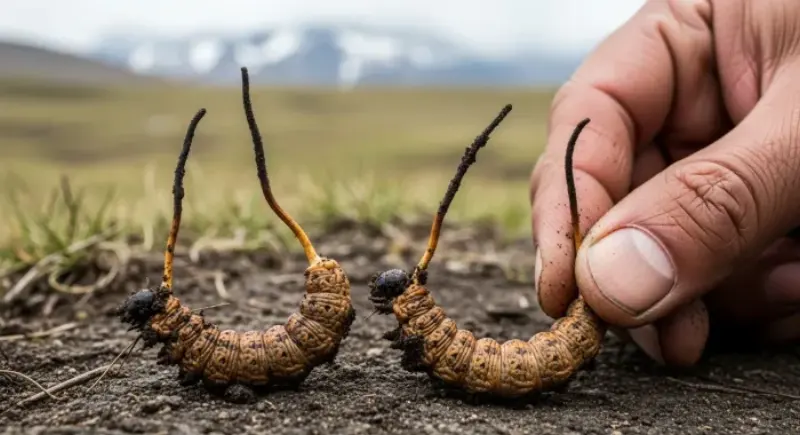
Keeda jadi is a fungus that grows on caterpillar larvae in Himalayan meadows above 3,500 metres. Its Hindi name means "insect herb." Wild Himalayan keeda jadi costs ₹10-15 Lakh per kg due to extreme scarcity. Lab-grown Cordyceps militaris, cultivated on plant substrate, contains equal or higher active compounds and costs ₹25-100 per gram. All published human clinical trial evidence for keeda jadi's benefits uses the lab-grown form.
- Hindi name: keeda jadi (insect herb)
- Scientific names: Ophiocordyceps sinensis (wild), Cordyceps militaris (lab-grown)
- Wild price: ₹800-2,500 per gram
- Lab-grown price: ₹25-100 per gram
- Main benefits: stamina, aerobic capacity (VO2 max +11.8%), immunity, energy
Type "keeda jadi" into any Indian search engine and you'll find three things mixed together: wild Himalayan fungus listings at astronomical prices, supplement brands selling capsules of unknown origin, and a lot of confusion about what the name actually refers to. This guide separates all three.
We run a Cordyceps militaris cultivation and processing facility in Barwani, Madhya Pradesh. Our work gives us a direct view of what keeda jadi is, what the research actually says, and why the price gap between wild and lab-grown matters more than most buyers realize.
Keeda Jadi Kya Hai? (What Is Keeda Jadi?)
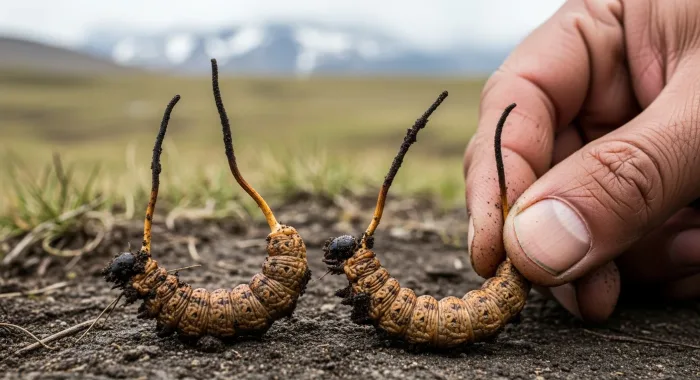
Keeda jadi ka matlab hai "keeda" (insect) + "jadi" (herb or root). It is not a plant. Keeda jadi is a parasitic fungus, technically a type of entomopathogenic fungus, that infects and slowly replaces the body of a caterpillar larva.
The process works like this: fungal spores infect a Hepialus moth larva buried in high-altitude soil. The fungus consumes the larva from the inside over one to two years, eventually sending a fruiting body (stroma) up through the soil surface. What you see when you look at a keeda jadi specimen is the dried larva below and the fruiting body above, half insect, half fungus.
This is also why keeda jadi is not vegan: the wild form literally is a dead caterpillar. Lab-grown Cordyceps militaris is cultivated on grain or plant substrate with no insect host, making it fully vegan.
Keeda jadi ka paudha: Searchers sometimes ask if keeda jadi is a plant. It is not. The word "jadi" in the name is a traditional classification, not a botanical one. Keeda jadi belongs to the fungus kingdom, not the plant kingdom. The distinction matters because the active compounds (cordycepin, adenosine, beta-glucans) are fungal metabolites, not plant phytochemicals.
Himalayan Keeda Jadi, Where It Grows and Why It's So Rare
Wild keeda jadi grows in the alpine meadows of Uttarakhand, Himachal Pradesh, Sikkim, and Arunachal Pradesh, typically between 3,500 and 5,000 metres above sea level. Similar populations exist in Nepal, Tibet, and Bhutan, where it is called yarsagumba.
Several factors make wild keeda jadi almost impossibly rare:
- The fungus-caterpillar infection cycle takes one to two years to complete
- The tiny fruiting body emerges for only a few weeks per year during snowmelt (May to July)
- Harvesters must scan bare alpine ground by eye, no mechanized collection is possible at those altitudes
- Annual harvests from the entire Indian Himalayan range total only a few hundred kilograms
- Climate change and overharvesting have pushed populations into decline since the early 2000s
The result: wild keeda jadi is among the most expensive biological commodities on earth by weight, consistently more costly per gram than gold. For a detailed price breakdown by grade and region, see our 2026 Keeda Jadi price guide.
Keeda Jadi ke Fayde, Main Benefits Backed by Research
The traditional uses of keeda jadi span centuries: Tibetan and Chinese medicine prescribed it for stamina, altitude adaptation, and vitality. Modern clinical research has moved beyond tradition to test specific mechanisms.
Here is what the human trial evidence shows, using lab-grown Cordyceps militaris (the species with verified active compound concentrations):
1. Aerobic Performance and VO2 Max
Hirsch et al. (2017) ran a randomized controlled trial giving 3g of Cordyceps militaris daily to healthy adults. After three weeks, the supplement group showed an 11.8% increase in VO2 max compared to placebo. This is a meaningful athletic performance gain from a non-stimulant supplement.
2. Energy at the Cellular Level
Cordycepin, the primary active compound, activates AMPK, the enzyme that regulates cellular energy balance. Song et al. (2015) showed cordycepin increases ATP production efficiency, which explains the "sustained energy without jitteriness" effect users describe. This is distinct from caffeine's mechanism: it's metabolic, not stimulant.
3. Immune Function
Beta-glucans in Cordyceps militaris activate natural killer (NK) cells and macrophages. A 2009 human study demonstrated measurable NK cell upregulation after Cordyceps supplementation, translating to improved immune surveillance, relevant for both illness prevention and post-viral recovery.
4. Anti-Inflammatory Action
Multiple studies show cordycepin inhibits NF-kB and COX-2, two central nodes of inflammatory signaling. This explains the reported benefit for chronic fatigue and recovery from physical stress.
5. Altitude Adaptation
High-altitude peoples historically used keeda jadi to combat the reduced oxygen availability above 4,000 metres. The VO2 max and aerobic efficiency improvements from clinical trials map directly onto this traditional use, more efficient oxygen utilization is beneficial whether you're at altitude or at sea level.
For the full evidence breakdown with study citations and dosing protocols, see our dedicated keeda jadi benefits guide. Hindi readers: keeda jadi ke fayde (Hindi).
Keeda Jadi Price in India 2026
Price varies dramatically depending on what you're actually buying:
| Type | Price Range | Cordycepin Content |
|---|---|---|
| Wild Himalayan (O. sinensis) | ₹80,000-2,50,000/kg wholesale | 0.02-0.1% |
| Lab-grown Cordyceps militaris fruiting body | ₹25,000-1,00,000/kg wholesale | 0.3-0.6% |
| C. militaris extract (10:1) | ₹2,50,000-5,00,000/kg | 3-6% |
| Retail capsules (branded) | ₹1,500-4,000 for 60-90 caps | Varies (check CoA) |
Keeda jadi price in Delhi and other major cities follows a retail markup over wholesale. Direct-from-lab procurement eliminates 3 to 4 layers of margin. For Hindi speakers researching price by grade: keeda jadi price guide in Hindi.
One important note: any product marketed as "wild Himalayan keeda jadi" and priced below ₹50,000/kg wholesale should be questioned. At that price point, authentic O. sinensis supply is economically implausible given harvest volumes and chain-of-custody costs.
Keeda Jadi Uses, Powder, Capsule, Tea, and Extract
Keeda jadi powder is the most common commercial form. It mixes into water, milk, coffee, or smoothies without a strong taste, a mild earthy note that most users describe as neutral.
Keeda jadi powder: 1-4g per day, taken with breakfast or 45-60 minutes before physical activity. This is the form used in most clinical trials.
Keeda jadi capsule: Convenient, pre-measured. Look for capsules that specify the total cordycepin content per serving (at least 15mg per 1g serving) and carry a third-party Certificate of Analysis (CoA). The CoA number matters more than the brand name.
Tea: Simmering 1-2g of powder in hot water or milk for 10-15 minutes. Traditional preparation. Lower cordycepin yield than capsules due to the hydrolysis-sensitive nature of some compounds.
10:1 extract: Concentrated form. Each gram contains the cordycepin equivalent of 10g of raw powder. Better suited for supplement formulations than direct consumer use.
Keeda jadi patanjali: Patanjali and several other FMCG brands sell products labelled "keeda jadi" or "Himalayan Cordyceps." Third-party testing of Indian branded cordyceps products (2023, independent lab testing reported by supplement review outlets) has found significant variation in actual cordycepin content between labelled amount and tested amount. Always request the CoA before buying any brand.
Keeda Jadi Farming in India, Is Lab-Grown Real?
Wild keeda jadi (O. sinensis) cannot be commercially farmed. Every attempt to cultivate the wild species at scale has failed, the complex 2-year host-parasite cycle, the narrow altitude and temperature requirements, and the specific soil ecology make O. sinensis cultivation economically impossible at present.
What is farmed, and farmed successfully, is Cordyceps militaris. C. militaris is a related species in the same family. It produces cordycepin and adenosine at 4 to 8 times the concentration of wild O. sinensis, grows on simple grain substrates at room temperature, and reaches full fruiting body maturity in 45 to 60 days.
Keeda jadi farming training programs in India teach C. militaris cultivation (not O. sinensis). This is worth knowing if you're evaluating farming as a livelihood or business opportunity. The biology is learnable and the equipment costs are within reach, but the market requires quality discipline: consistent cordycepin testing and clean cultivation practices.
Synervion has operated C. militaris cultivation at Barwani, MP since 2022 under FSSAI certification. We also supply dried fruiting body and extract to supplement brands across India. For supply inquiries: wholesale and bulk supply details.
Keeda Jadi in English, and the Lab-Grown Alternative
In English, keeda jadi is called "Himalayan Cordyceps," "caterpillar fungus," or simply "Cordyceps." The genus name Cordyceps covers both the wild Himalayan species (Ophiocordyceps sinensis, reclassified from Cordyceps sinensis) and the cultivated species (Cordyceps militaris).
The name confusion in English matters because Western supplement markets primarily use Cordyceps militaris (lab-grown, affordable) while the "wild Himalayan Cordyceps" narrative, driven partly by traditional medicine and partly by premium pricing, applies to O. sinensis. When a Western brand says "Cordyceps," they almost always mean C. militaris. When a traditional medicine vendor in India says "keeda jadi," they may mean either species, or a blend.
For supplement buyers: the compound that matters is cordycepin. Ask for the cordycepin content per gram. Lab-grown C. militaris from a quality-controlled facility delivers more cordycepin per rupee than any wild Himalayan source at current prices. For a full comparison: Cordyceps militaris vs sinensis, which one to use.
For Supplement Brands and Nutraceutical Formulators
Synervion supplies Cordyceps militaris dried fruiting body, 10:1 extract, and white-label capsules from our FSSAI-certified Barwani facility. Batch-specific CoA with cordycepin and beta-glucan values on every order. Minimum order quantities available for small brands as well as large-scale contract manufacturers.
Keeda Jadi in English: What the Name and Science Tell You
In English, keeda jadi translates as "insect herb" or "caterpillar fungus." The scientific classification separates into two species that are regularly confused:
- Ophiocordyceps sinensis — wild Himalayan keeda jadi. The caterpillar-plus-fungus composite harvested above 3,500 metres. Extremely scarce, legally restricted in some collecting areas, and priced at ₹10 to 15 Lakh per kg for authenticated material.
- Cordyceps militaris — the lab-grown equivalent. Cultivated on plant substrate (no insects involved), vegan, and available year-round. The compound profile — cordycepin, adenosine, beta-glucans — is comparable or superior to wild sinensis in controlled studies.
When Indian buyers search "keeda jadi" they are often looking for either the wild Himalayan variety for traditional use, or a functional supplement for energy and endurance. Lab-grown Cordyceps militaris serves both purposes for everyone except buyers who specifically need wild-harvest provenance — which is a smaller group than the marketing suggests.
One point worth making plainly: most "Himalayan keeda jadi" sold in Indian retail is not authenticated wild sinensis. The price differential alone tells you this. Authenticated wild material at ₹10 Lakh per kg does not appear in a ₹500 supplement bottle. Lab-grown militaris does — and it is the more consistent product.
Keeda Jadi Ke Fayde (कीड़ा जड़ी के फायदे)
Keeda jadi ke mukhya fayde in brief — the evidence-backed benefits that apply to Cordyceps militaris specifically:
- Urja aur stamina: ATP production enhancement leads to sustained, crash-free energy. Studies show up to 28% improvement in cellular ATP levels. Athletes and active individuals report meaningful differences in endurance within 2 to 3 weeks of consistent use.
- Oxygen utilisation (VO2 max): A 2010 clinical trial published in the Journal of Alternative and Complementary Medicine found 7 to 11% improvement in VO2 max in trained adults after 3 weeks of Cordyceps militaris supplementation. Relevant for runners, cyclists, and anyone working at altitude.
- Immunity (pratirodhak shakti): Beta-glucans and polysaccharides in Cordyceps modulate immune function — they help balance immune responses rather than simply stimulate them. Useful for individuals recovering from illness or dealing with seasonal immune challenges.
- Mental clarity: Cordycepin crosses the blood-brain barrier and has shown neuroprotective activity in preclinical research. Users report sharper focus without the jitter-and-crash pattern of caffeine.
- Liver aur kidney support: Traditional Ayurvedic and TCM use of keeda jadi includes kidney tonic applications. Modern research is preliminary but supportive for renal function markers in specific populations.
For a detailed breakdown with clinical references: full Cordyceps militaris benefits guide.
Keeda Jadi Powder vs Whole Fruiting Body: Which Form to Choose
Indian buyers encounter keeda jadi in three main forms. The right choice depends on how you plan to use it:
- Whole dried fruiting body: The intact mushroom. Used in traditional preparations — decoctions, teas, and tinctures. Slower to absorb but contains the full spectrum of compounds including structural polysaccharides. Good for buyers who want minimal processing.
- Standardised powder: Ground fruiting body, ideally tested by HPLC for cordycepin content. The most versatile form — goes into capsules, protein powders, and food products. Check that the COA specifies cordycepin percentage, not just generic "polysaccharides." Target: 0.3% cordycepin minimum for functional effect.
- 10:1 dual extract: Hot-water and alcohol extraction concentrates the active compounds. Higher cost per gram but higher potency per dose. Suitable for supplement formulations where label dose size matters. Not all extracts are equal — ask for HPLC documentation on both cordycepin and beta-glucan content.
What to avoid: mycelium-on-grain products sold as "Cordyceps." These are grown on rice or other grain and are primarily starch with minimal active compounds. The giveaway is price — genuine fruiting body material does not sell for ₹2,000 to ₹5,000 per kg. If the price seems too low, the material is almost certainly mycelium biomass.
For wholesale buyers: bulk pricing and quality grading guide.