This article is part of our complete guide to Cordyceps Militaris Benefits. Here we focus specifically on high-altitude training and hypoxia adaptation.
Direct Answer
Cordyceps militaris for high-altitude training works by enhancing cellular ATP synthesis under hypoxic conditions and improving VO₂ max (+7-11% in clinical trials). It delays breathlessness at altitude by supporting oxygen utilisation and lactate clearance. Protocol: 2-3g daily, beginning 2-3 weeks before altitude exposure. Safe, WADA-compliant, and used by mountaineers and endurance athletes.
Why Is Cordyceps the Secret Weapon for High Altitude?
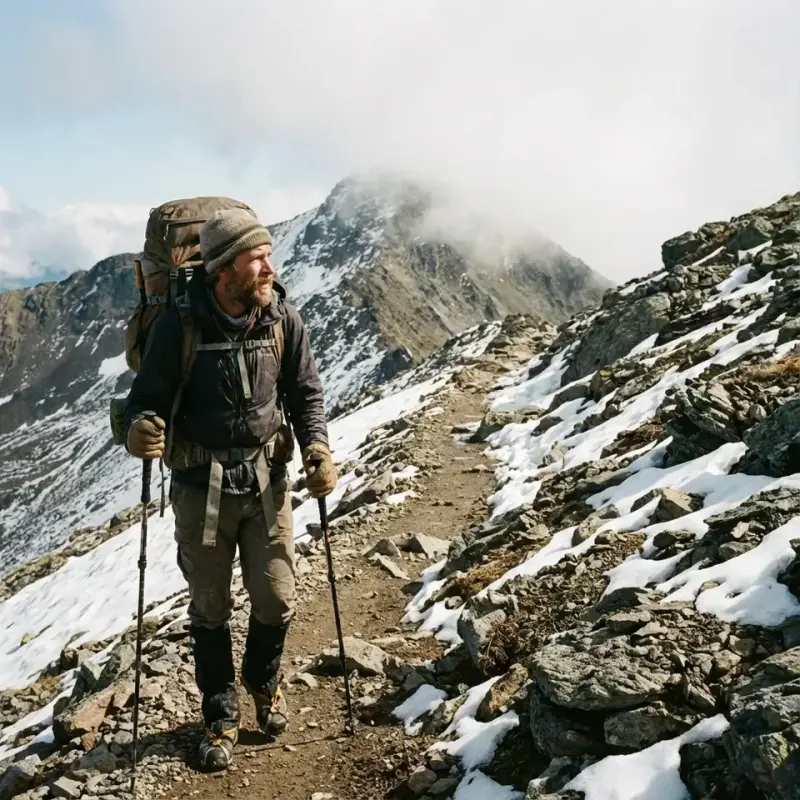
High-altitude training places immense stress on the body. As oxygen levels drop-sometimes by 40% or more at elevations above 4,000 meters-your body must work significantly harder to deliver oxygen to working muscles. This is precisely where Cordyceps militaris provides its greatest advantage.
Used for centuries by Himalayan Sherpas navigating the world's highest peaks, Cordyceps has evolved from traditional remedy to scientifically validated ergogenic aid. Modern research confirms what traditional practitioners knew: this fungus genuinely improves the body's efficiency in utilizing oxygen under hypoxic conditions.
How Does Cordyceps Improve Oxygen Uptake?
The mechanisms behind Cordyceps' altitude benefits are multifactorial:
- Enhanced ATP Production: Cordyceps increases cellular ATP synthesis, providing energy even when oxygen is limited. This is crucial because altitude reduces the aerobic pathway's efficiency.
- Improved VO₂ Max: Studies show Cordyceps can enhance maximal oxygen consumption (VO₂ max), allowing your cardiovascular system to extract more oxygen from each breath.
- Better Hemoglobin Oxygen Affinity: Some research suggests Cordyceps may optimize how readily hemoglobin releases oxygen to tissues-particularly beneficial when every oxygen molecule counts.
"Cordyceps supplementation significantly improved tolerance to high-intensity exercise under simulated high-altitude hypoxic conditions, with subjects showing enhanced time to exhaustion." - Hirsch et al., Journal of Dietary Supplements (2017)
Specific Benefits for Altitude Training
- Accelerated Acclimatization: May help the body adapt more quickly to reduced oxygen availability.
- Maintained Training Intensity: Supports the ability to train at higher intensities despite altitude-induced performance decrements.
- Reduced Fatigue: Helps clear lactic acid faster, combating the increased lactate accumulation common at altitude.
- Respiratory Support: Works synergistically with your lungs-learn more in our guide to cordyceps for lung capacity and VO₂ max.
Altitude Training Protocol with Cordyceps
For optimal results when preparing for high-altitude exposure:
- Pre-Loading Phase (2-3 weeks before): Begin with 1-2g daily to build systemic levels of bioactive compounds.
- Ascent Phase: Increase to 2-3g daily during the initial altitude exposure when adaptation stress is highest.
- Maintenance Phase: Continue 1-2g daily throughout your altitude stay.
Timing matters: take Cordyceps with breakfast or 45-60 minutes before training sessions for optimal absorption and effect.
Who Benefits Most from Cordyceps at Altitude?
- Mountaineers and Trekkers: Preparing for expeditions to Kilimanjaro, Everest base camp, or any elevation above 2,500m.
- Endurance Athletes: Using altitude camps for performance optimization (cyclists, runners, triathletes).
- Ski Tourers and Backcountry Enthusiasts: Those combining high exertion with high elevation.
This page focuses on altitude-specific dosing. For broader endurance applications across running, cycling, and triathlon, see our endurance applications for runners and cyclists pillar. The mechanisms covered here trace back to peer-reviewed work catalogued in our indexed Cordyceps clinical research. Cost-conscious mountaineers and expedition leaders should also see current Keeda Jadi pricing in India, lab-grown militaris delivers comparable cordycepin levels at a fraction of wild-harvested rates. Teams sourcing for full expedition rosters can request bulk wholesale Cordyceps supply ex-works Barwani.
Related Reading
Understand the complete picture of Cordyceps benefits:
Scientific References
- Hirsch KR, et al. (2017). "Cordyceps militaris improves tolerance to high intensity exercise after acute and chronic supplementation." Journal of Dietary Supplements.
- Chen S, et al. (2010). "Effect of Cs-4 on exercise performance in healthy older subjects." Journal of Alternative and Complementary Medicine.
- Parcell AC, et al. (2004). "Cordyceps sinensis (CordyMax Cs-4) supplementation does not improve endurance exercise performance." International Journal of Sport Nutrition.
- Zhu JS, et al. (1998). "The scientific rediscovery of an ancient Chinese herbal medicine: Cordyceps sinensis." Journal of Alternative and Complementary Medicine.