Direct Answer
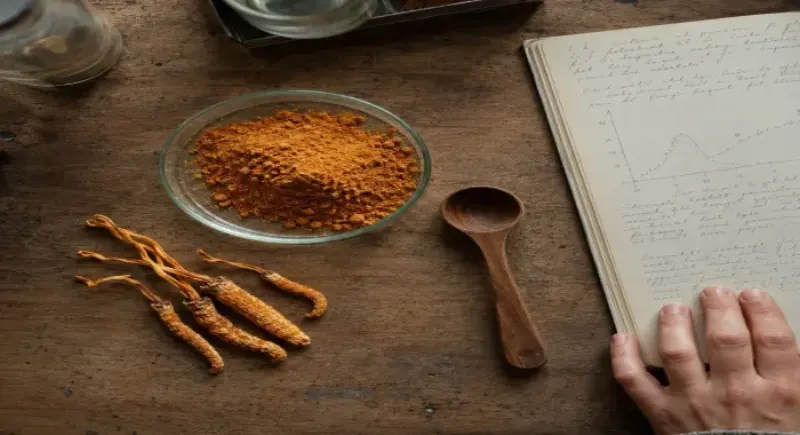
Can Cordyceps support gut health? The preclinical evidence is encouraging: Cordyceps polysaccharides (beta-glucans) act as prebiotics in animal studies, selectively feeding beneficial bacteria like Lactobacillus and Bifidobacterium while suppressing pathogenic species. Cordycepin's anti-inflammatory action — via NF-κB and COX-2 inhibition — extends to gut tissue, which may reduce intestinal inflammation relevant to IBS and leaky gut. There are no large-scale human RCTs confirming Cordyceps as a standalone gut treatment. For Indian users managing IBS, bloating, or microbiome imbalance, Cordyceps is a plausible complementary supplement when taken at 1–3g daily with food.
This article is part of our complete guide to Cordyceps Militaris Benefits. Here we focus specifically on digestive and gut microbiome applications.
How Cordyceps Affects the Gut: The Key Mechanisms
Cordyceps militaris contains two categories of compounds with documented effects on gut physiology:
- Polysaccharides (beta-glucans): High-molecular-weight carbohydrate structures that reach the colon largely undigested. In the colon, they are fermented by gut bacteria — acting as a prebiotic substrate that selectively nourishes beneficial species.
- Cordycepin and adenosine: These nucleoside compounds have anti-inflammatory properties, primarily through inhibition of NF-κB (a master switch for intestinal inflammation) and COX-2 (the enzyme that produces pro-inflammatory prostaglandins). This anti-inflammatory action is the same mechanism behind Cordyceps's systemic benefits, but it also operates at the gut mucosal level.
Together, these mechanisms could theoretically support gut microbiome diversity, reduce intestinal inflammation, and improve the integrity of the gut lining — though human clinical confirmation remains limited.
The Prebiotic Effect: Cordyceps Polysaccharides and Your Microbiome
Your gut contains roughly 38 trillion microbial cells. The composition of this community — which species dominate, which are suppressed — has measurable effects on immune function, mood, energy metabolism, and digestive comfort. Prebiotics are compounds that selectively feed beneficial species without feeding pathogenic ones.
Cordyceps polysaccharides fit this profile. In rodent studies, oral administration of Cordyceps militaris extract increased the relative abundance of Lactobacillus and Bifidobacterium species while reducing populations of opportunistic species like Clostridium. These shifts are associated with improved intestinal barrier function and reduced systemic inflammation in the animal models studied.
The caveat: these are animal studies, and gut microbiome effects are notoriously species-specific. Human microbiome responses to Cordyceps polysaccharides have not been characterised in large-scale trials. The prebiotic mechanism is plausible and supported by the known fermentability of beta-glucans generally (oat beta-glucan prebiotic effects are well-established in humans), but Cordyceps-specific human microbiome data is limited.
For context on how gut bacteria interact with immune function, see our guide on Cordyceps for immune system support.
Anti-Inflammatory Action at the Gut Lining
Intestinal inflammation — whether from IBS, dysbiosis, dietary triggers, or chronic stress — is a common underlying driver of gut symptoms in India. The gut mucosa is rich in immune cells, and chronic low-grade inflammation at this level produces bloating, altered motility, and abdominal discomfort.
Cordycepin inhibits NF-κB activation — the transcription factor that drives production of inflammatory cytokines including TNF-α, IL-6, and IL-1β. In gut tissue, NF-κB overactivation is a hallmark of inflammatory bowel conditions. COX-2 inhibition (the same target as ibuprofen, through a different mechanism) reduces prostaglandin production in the gut lining.
This anti-inflammatory action is not gut-specific — it is a systemic property of cordycepin documented across multiple tissue types. But the gut lining, being constantly exposed to dietary and microbial triggers of inflammation, may benefit particularly from sustained anti-inflammatory signalling.
Important framing: Cordyceps is not a treatment for inflammatory bowel disease (Crohn's, ulcerative colitis) or IBS. These are medical conditions requiring diagnosis and management by a gastroenterologist. Cordyceps may be a useful complementary support, but anyone with diagnosed gut conditions should discuss supplementation with their physician before starting.
Cordyceps and IBS in India: What the Evidence Actually Says
IBS (Irritable Bowel Syndrome) affects an estimated 4–7% of the Indian population, though underdiagnosis is common. It is characterised by abdominal pain, bloating, altered bowel habits, and worsening with psychological stress — a pattern that maps neatly onto the gut-brain axis dysregulation that many adaptogens target.
There are no RCTs examining Cordyceps specifically for IBS. What exists is:
- Mechanistic plausibility: anti-inflammatory, prebiotic, and gut motility pathways that Cordyceps modulates are all implicated in IBS pathophysiology.
- Animal studies of colitis models showing reduced intestinal inflammation with Cordyceps extract.
- Traditional use in Chinese medicine for conditions described as "intestinal disharmony" — though traditional classification does not map directly to IBS.
- Anecdotal reports of improved digestive comfort in users taking Cordyceps for other reasons (energy, immunity), consistent with but not confirmatory of a gut benefit.
For Indian users with stress-related IBS — which is the predominant pattern — Cordyceps's adaptogenic properties (buffering the cortisol response, improving mitochondrial energy in gut tissue) may indirectly improve gut symptoms. But this is mechanistic reasoning, not clinical evidence.
The Gut–Immune Connection
Approximately 70% of immune tissue in the body is located in the gut — in structures called gut-associated lymphoid tissue (GALT). The health of your gut microbiome directly influences the calibration of your immune system: a diverse microbiome supports balanced immune responses; dysbiosis (microbiome imbalance) is associated with heightened inflammatory tone and increased autoimmune risk.
Cordyceps supports this axis from both ends: the beta-glucan prebiotic effect improves microbiome diversity (supporting GALT calibration), while the anti-inflammatory and immunomodulatory properties of cordycepin and adenosine act on the GALT immune cells directly.
This dual action — modulating both the microbiome and the mucosal immune system — is the strongest theoretical argument for Cordyceps as a gut-health support compound.
For a detailed look at Cordyceps's immunomodulatory properties, see our guide on Cordyceps for immune support.
India-Specific Context: Why Gut Health Deserves Attention Here
Several features of the Indian health context make gut health particularly relevant:
- Dietary transitions: Rapid shifts from traditional fibre-rich diets (dal, vegetables, whole grains) toward ultra-processed foods are altering gut microbiome composition at population scale, increasing dysbiosis risk.
- High psychological stress: India's working-age population faces compounding stressors (commuting, job pressure, family obligations). Chronic psychological stress reliably worsens gut motility and mucosal inflammation via the gut-brain axis.
- Antibiotic overuse: India has among the highest antibiotic consumption rates globally, disrupting gut microbiome diversity. Post-antibiotic microbiome recovery is a genuine clinical need where prebiotic support has a clear role.
- Water and food safety: Repeated gut infections from contaminated food and water are more common in India than in high-income countries, with knock-on effects on gut microbiome stability and mucosal barrier integrity.
These factors make prebiotic and anti-inflammatory gut support genuinely relevant for Indian users — not just as wellness add-ons but as functional tools addressing real epidemiological patterns. There is also a documented gut-metabolic connection: microbiome dysbiosis is associated with insulin resistance and elevated blood glucose. For Indian users managing metabolic health, supporting gut microbiome diversity may contribute to better blood sugar regulation — a pathway where Cordyceps shows independent mechanistic support.
How to Take Cordyceps for Gut Health
| Parameter | Recommendation | Rationale |
|---|---|---|
| Starting dose | 1g daily with food | Lower dose assesses gut tolerance before escalating |
| Maintenance dose | 2–3g daily with meals | Higher dose delivers more polysaccharide substrate for prebiotic effect |
| Timing | With breakfast or divided across two meals | Food matrix improves tolerability; divided dosing maintains sustained exposure |
| Form | Fruiting body powder or standardised extract | Fruiting body has higher polysaccharide content than mycelium-on-grain products |
| Timeframe | 4–8 weeks for meaningful gut microbiome shifts | Microbiome modulation is slow; acute gut symptom relief (if it occurs) may appear sooner via anti-inflammatory action |
Digestive Side Effects: What to Expect
The most common side effects of Cordyceps are gastrointestinal — mild nausea, bloating, or loose stools — particularly during the first 1–2 weeks of use. These are typically transient and resolve with continued use or dose reduction.
The mechanism is consistent with the prebiotic effect: introducing new fermentable substrate to the colon can temporarily alter gas production and motility as the microbiome adjusts. This is the same pattern seen when introducing other prebiotic supplements (inulin, FOS, psyllium).
Practical guidance for sensitive digestive systems:
- Start at 500mg–1g daily with food (not on an empty stomach).
- Increase by 500mg every 5–7 days to allow microbiome adaptation.
- If bloating persists beyond 3 weeks, try splitting the dose across two meals rather than taking it all at once.
- People with existing IBS may initially experience more gas — this is expected and usually temporary.
For a comprehensive overview of Cordyceps safety and all documented side effects, see our dedicated guide: Cordyceps side effects and safety.
Related Reading
Explore more about Cordyceps health applications:
Scientific References
- Tuli HS, et al. (2013). "Pharmacological and therapeutic potential of Cordyceps with special reference to Cordycepin." 3 Biotech. Reviews anti-inflammatory and immunomodulatory mechanisms of cordycepin.
- Zhou X, et al. (2009). "Cordyceps fungi: natural products, pharmacological functions and developmental products." Journal of Pharmacy and Pharmacology. Comprehensive review including polysaccharide characterisation and prebiotic-like properties.
- Zhang HW, et al. (2014). "Cordyceps sinensis (a traditional Chinese medicine) for treating chronic kidney disease." Cochrane Database of Systematic Reviews. Notes gut tolerability data from chronic dosing trials.