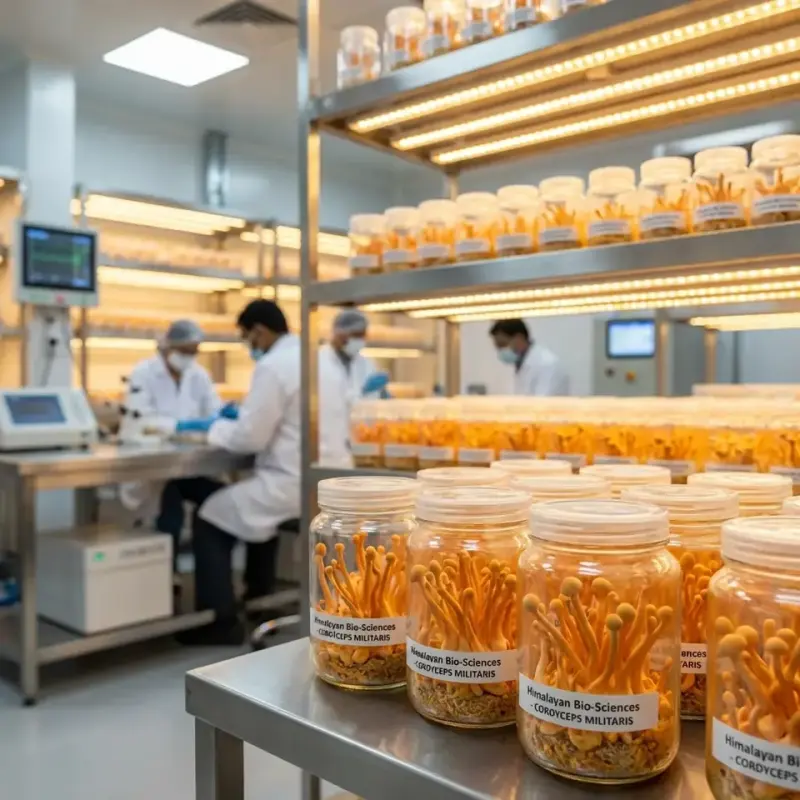
Cordyceps militaris is considered safe for most healthy adults at 1-3 g of fruiting body powder per day. Side effects are uncommon and typically mild, the most reported is temporary digestive discomfort when starting. People with autoimmune conditions, those on blood-thinning medications, and pregnant or breastfeeding women should consult a doctor before use.
- Most common side effect: Mild nausea or loose stools in the first 1-2 weeks, usually resolves on its own.
- Who should be cautious: People with autoimmune disorders, those on anticoagulants, or with mushroom allergies.
- Safety advantage of lab-grown: Eliminates heavy-metal contamination risks common in wild-harvested specimens.
Is Cordyceps Militaris Safe?
Cordyceps militaris has a centuries-long history of use in traditional Asian medicine and has been the subject of modern pharmacological research for several decades. The current evidence base, drawn from animal studies, in-vitro research, and a growing number of human clinical trials, consistently characterises it as low-risk and well-tolerated when consumed as a standardised fruiting body supplement at recommended doses.
The key distinction for safety is species and form. Wild-harvested Ophiocordyceps sinensis (the Himalayan Keeda Jadi) carries environmental contaminant risks, including heavy metals from high-altitude soils, that lab-grown Cordyceps militaris does not. This is one of several reasons why lab-grown militaris is preferred for modern supplementation.
What Does Clinical Research Show?
Multiple human trials have evaluated Cordyceps safety in healthy adults, older adults, and athletes. Studies published in the Journal of Alternative and Complementary Medicine and Journal of Dietary Supplements reported no serious adverse events in participants using doses of 3-6 g per day over 8-12 weeks. The pharmacological profile studied across this research includes:
| Parameter Assessed | Reported Outcome in Trials |
|---|---|
| Liver enzymes (ALT, AST) | Within normal range; no hepatotoxicity signal |
| Kidney function (creatinine, urea) | Within normal range across reviewed studies |
| Haematological markers | No clinically significant changes reported |
| Cardiovascular (HR, BP) | No arrhythmia or hypertensive effect; adenosine may mildly lower BP |
| Gastrointestinal | Occasional mild nausea/loose stools, typically transient |
The pharmacological potential of Cordyceps has been reviewed in 3 Biotech and Herbal Medicine: Biomolecular and Clinical Aspects, both of which confirm its broadly favourable safety profile when used as a whole fruiting body supplement at standard dosages.
Known and Reported Side Effects
The side effects that do occur with Cordyceps are generally mild, transient, and dose-related. The most commonly reported include:
-
●
Digestive discomfort, Nausea, loose stools, or stomach upset in the first 1-2 weeks. Usually resolves as the body adjusts. Taking Cordyceps with food significantly reduces this risk. For the fuller picture, including the prebiotic evidence and its limits, read Cordyceps for gut health.
-
●
Dry mouth, Reported occasionally. Mild and transient.
-
●
Mild stimulating effect, Some users report difficulty sleeping if they take a large dose in the evening. This is not sedation-disruption in the pharmacological sense; Cordyceps is adaptogenic, not stimulant, but individual sensitivity varies. See our timing guide for how to optimise dosing windows.
-
●
Allergic reactions, Rare, but possible in people with known mushroom allergies. If you react to other edible fungi, start with a small test dose (0.25-0.5 g) and observe for 24 hours.
What does NOT typically happen:
Cordyceps does not cause the jitteriness, palpitations, or afternoon crashes associated with caffeine. It also has no reported addiction or dependence potential. If you are looking to reduce caffeine while maintaining energy, see our guide on how to reduce caffeine without losing energy.
Who Should Avoid or Be Cautious with Cordyceps?
Autoimmune Conditions
Cordyceps is an immunomodulator, it can upregulate or balance immune activity depending on context. For people with autoimmune diseases (lupus, rheumatoid arthritis, multiple sclerosis, inflammatory bowel disease), this immune stimulation may theoretically exacerbate the condition. If you have an autoimmune diagnosis, consult your physician before use. Do not use as a substitute for prescribed immunosuppressants. See our deeper review of Cordyceps and immune function.
Pregnancy and Breastfeeding
There is insufficient clinical data on Cordyceps use during pregnancy or lactation. Out of caution, avoid use until more research is available. This is a precautionary position, not an established contraindication based on observed harm.
Children
Clinical trials on Cordyceps have been conducted in adults. There is no established safety data for children. Avoid use in children under 18 without medical supervision.
Pre-Surgery
Cordyceps may have mild antiplatelet effects via its adenosine content. As a precaution, discontinue use at least two weeks before any scheduled surgery, and inform your surgical team of any supplements you have been taking.
Cordyceps and Medications: What to Know
No major drug interactions with Cordyceps have been definitively established in large-scale human trials. However, based on its known pharmacological actions, the following categories warrant attention and a conversation with your prescribing physician:
| Medication Category | Potential Concern | Guidance |
|---|---|---|
| Anticoagulants (warfarin, heparin) | May add to blood-thinning effects via adenosine pathway | Consult doctor; monitor INR if combining |
| Immunosuppressants (cyclosporine, tacrolimus) | Immune-stimulating effect may work against drug purpose | Avoid without explicit physician approval |
| Antidiabetic drugs (insulin, metformin) | Cordyceps may have mild hypoglycaemic effects | Monitor blood glucose; discuss with doctor |
| Stimulants (amphetamines, high-dose caffeine) | No direct interaction known; Cordyceps is not stimulant-class | Generally safe to combine; note timing |
This table is for general educational reference. It is not a substitute for pharmacist or physician guidance specific to your health situation.
Does Quality Affect Safety? Lab-Grown vs Adulterated Products
Product quality is arguably the largest safety variable for Indian consumers, and it is often overlooked in discussions focused on the compound itself.
Wild-Harvested Contamination Risks
Wild Ophiocordyceps sinensis collected from high-altitude Himalayan regions can contain heavy metals (arsenic, lead) from geological soil contamination. Products labelled "wild Himalayan cordyceps" at low prices are frequently adulterated with inferior cultivated mycelium or entirely different fungi. This adulteration introduces unpredictable safety variables that have nothing to do with genuine Cordyceps pharmacology. See our detailed Keeda Jadi price and authentication guide.
Lab-Grown: A Cleaner Safety Profile
FSSAI-certified lab-grown Cordyceps militaris, grown in controlled environments on food-grade substrates, eliminates the heavy metal and contamination risks of wild-harvest. Each batch can be HPLC-tested to verify cordycepin and adenosine content, and screened for pesticides, mycotoxins, and heavy metals. This is the standard at facilities like Synervion's Barwani facility, and it is precisely why quality certification matters when choosing a supplement.
How to Verify Safe Cordyceps in India
When evaluating a Cordyceps supplement in India, use this checklist:
- ✅ FSSAI license number visible on label, mandatory for legal sale in India
- ✅ Species clearly stated, "Cordyceps militaris fruiting body" (not just "cordyceps extract")
- ✅ Cordycepin content disclosed, look for HPLC-tested cordycepin % (minimum 0.1%; quality products target 0.3-1%)
- ✅ Heavy metal testing certificate available, lead, arsenic, cadmium, mercury within FSSAI limits
- ✅ No mycelium on grain, "mycelium" products have diluted bioactive content; fruiting body is the validated form
- ✅ GMP manufacturing, look for ISO or GMP certification on the brand or OEM manufacturer
For B2B buyers, our wholesale sourcing guide covers documentation requirements, CoA interpretation, and supplier evaluation in detail.
Safe Dosage Range
Based on available clinical literature and traditional usage guidelines:
- Standard maintenance dose: 1-2 g dried fruiting body powder per day
- Performance/therapeutic dose: 2-3 g per day (split across morning and pre-workout doses)
- Upper range in clinical studies: Up to 6 g/day without observed adverse effects in healthy adults
- Recommendation: Start at 1 g/day for the first week to assess tolerance, then titrate upward
For specific dosage strategies based on your goal (endurance, energy, immunity, recovery), see our Cordyceps timing and dosage guide.
Important Disclaimer
This article is for educational purposes and does not constitute medical advice. If you have a pre-existing health condition, are pregnant, or are taking prescription medications, consult a qualified healthcare professional before starting any supplement. The safety information provided here pertains to genuine, FSSAI-certified Cordyceps militaris fruiting body, not adulterated or unverified products.