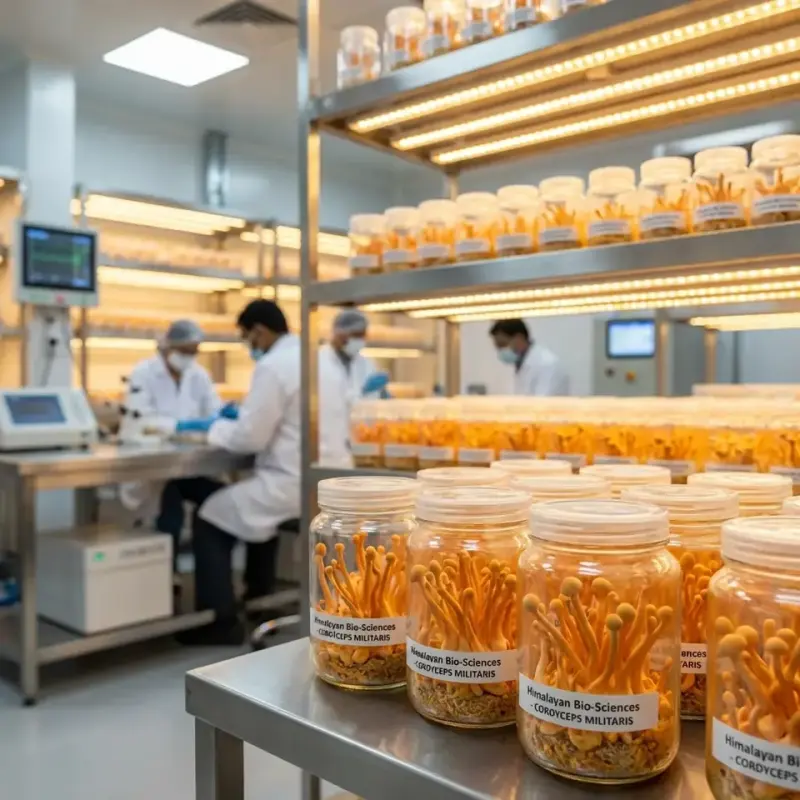
India's functional mushroom industry is experiencing unprecedented growth, and at the heart of this boom is Cordyceps militaris, a bioactive powerhouse prized for its adaptogenic, immunomodulatory, and energy-enhancing properties. Whether you are a nutraceutical brand owner, an Ayurvedic company looking to expand your product line, or an entrepreneur exploring the cordyceps manufacturing space in India, this comprehensive guide covers everything you need to know, from cultivation science and quality certifications to pricing, regulatory compliance, and choosing the right manufacturing partner.
The Indian cordyceps market, valued at approximately ₹850 crore in 2025, is projected to surpass ₹2,500 crore by 2030, driven by rising consumer awareness of functional mushrooms, growing demand for plant-based adaptogens, and government support for domestic nutraceutical manufacturing. India is uniquely positioned to become a global hub for lab-grown Cordyceps production, combining low operational costs with a rapidly maturing biotech ecosystem.
1. How Cordyceps Militaris is Cultivated
Unlike wild Ophiocordyceps sinensis (the legendary Himalayan caterpillar fungus), Cordyceps militaris can be reliably cultivated in controlled laboratory environments, making it the species of choice for commercial cordyceps manufacturing in India. The cultivation process is a precise blend of microbiology, environmental engineering, and quality control.
Substrate Preparation
The foundation of any cordyceps cultivation facility is its substrate, the nutrient medium on which the fungus grows. High-quality manufacturers use a rice-based substrate, carefully formulated with supplementary nutrients (silkworm pupae extract, peptone, yeast extract, or proprietary blends). The substrate is sterilised in an autoclave at 121°C for 20-30 minutes to eliminate competing microorganisms. The composition and sterilisation protocol directly impact the final cordycepin content, making this a critical differentiator between manufacturers.
Inoculation
Sterilised substrate containers are inoculated with C. militaris liquid culture or spawn under strict aseptic conditions, typically in a laminar flow hood within a Class 100,000 clean room. The quality of the mother culture (strain vigour, genetic stability, passage number) is perhaps the single most important factor determining the bioactive potency of the final product. Leading manufacturers like Synervion maintain proprietary strain banks with rigorous selection protocols to ensure consistent cordycepin and adenosine concentrations across every batch.
Growth Chamber Conditions
After inoculation, containers are transferred to environmentally controlled growth chambers, the heart of any cordyceps manufacturing facility. The cultivation cycle has two distinct phases:
- Vegetative Phase (15-20 days): Temperature maintained at 20-25°C, relative humidity at 60-70%, in complete darkness. The mycelium colonises the substrate, forming a dense white mat.
- Fruiting Phase (35-50 days): Temperature lowered to 18-22°C, humidity raised to 85-95%, with a controlled 12/12 or 16/8 light cycle (specific wavelengths in the 400-500nm range trigger stromata formation). CO₂ levels are actively managed below 800 ppm to promote elongation of the characteristic orange fruiting bodies.
Precise environmental control, including temperature uniformity (±0.5°C), humidity gradients, and airflow patterns, is what separates pharmaceutical-grade cultivation from hobbyist attempts. Facilities with IoT-enabled monitoring and automated HVAC systems achieve significantly more consistent bioactive profiles.
Harvesting & Drying
Fruiting bodies are harvested at peak maturity, when the stromata reach 5-8 cm in length and display a deep orange colour. Timing is critical: premature harvesting reduces cordycepin yield, while delayed harvesting triggers spore release and quality degradation. Post-harvest, the fruiting bodies are dried using controlled dehydration (typically freeze-drying or hot-air drying at 40-50°C) to a moisture content below 10%, preserving bioactive integrity. Freeze-drying is preferred for premium grades as it preserves volatile compounds and cellular structure.
Extraction & Standardisation
For extract-based products (capsules, tinctures, powders), the dried fruiting bodies undergo extraction, typically hot water extraction, ethanol extraction, or a dual-extraction process. The extract is then concentrated, spray-dried, and standardised to guaranteed levels of key bioactives (cordycepin, adenosine, polysaccharides). HPLC (High-Performance Liquid Chromatography) analysis verifies bioactive content, with premium manufacturers guaranteeing ≥0.5% cordycepin and ≥0.2% adenosine in their standardised extracts.
2. Quality Standards & Certifications
Quality is the non-negotiable foundation of any credible cordyceps manufacturing operation. The standards below are derived directly from the Cordyceps clinical research index that underpins efficacy and safety claims, so a supplier's adherence to them is also a proxy for how seriously they take the underlying science. For B2B buyers, whether you are a supplement brand, an Ayurvedic company, or a wholesale distributor, understanding the certification landscape is essential for protecting your brand reputation and ensuring regulatory compliance.
Essential Certifications
| Certification | What It Covers | Why It Matters |
|---|---|---|
| FSSAI License | Food safety and hygiene standards for manufacturing | Legally mandatory for any food/supplement production in India |
| GMP (Good Manufacturing Practice) | Production processes, equipment, hygiene, documentation | Ensures consistent product quality and contamination prevention |
| ISO 22000 / ISO 9001 | Food safety management / Quality management systems | Internationally recognised; essential for export markets |
| HACCP | Hazard analysis and critical control points | Systematic approach to identifying and preventing food safety hazards |
| NABL Accredited Lab Testing | Third-party analytical verification of bioactive content, heavy metals, microbial limits | Independent proof of potency and purity claims |
What to Look for in Lab Reports
A reputable cordyceps manufacturer should provide Certificate of Analysis (CoA) for every batch, including:
- Cordycepin content (HPLC-verified, typically reported as mg/g or percentage)
- Adenosine content (HPLC-verified)
- Polysaccharide content (typically β-glucans)
- Heavy metal panel (lead, cadmium, arsenic, mercury, must be below FSSAI limits)
- Microbial limits (total plate count, yeast & mould, coliforms, E. coli, Salmonella)
- Pesticide residue (should be non-detectable for lab-grown products)
- Moisture content (below 10% for dried products)
Synervion provides comprehensive NABL-accredited lab reports with every shipment. Our products, including SYNV-Core, SYNV-Pulse, and SYNV-Root, are tested for 40+ parameters to guarantee purity, potency, and safety.
3. Lab-Grown vs Wild-Harvested Cordyceps
One of the most common questions from B2B buyers is whether lab-grown Cordyceps militaris can match the efficacy of wild-harvested Ophiocordyceps sinensis (also known as Keeda Jadi). The short answer: lab-grown C. militaris is not just comparable, in many measurable parameters, it is superior.
| Parameter | Lab-Grown C. militaris | Wild-Harvested O. sinensis |
|---|---|---|
| Cordycepin Content | High (0.5-1.2% in standardised extracts) | Trace to low (often undetectable) |
| Adenosine Content | Standardisable (0.2-0.5%) | Variable (0.1-0.3%) |
| Batch Consistency | Excellent (controlled environment) | Poor (seasonal, altitude-dependent) |
| Sustainability | Fully sustainable, scalable | Critically endangered, over-harvested |
| Cost (per kg) | ₹25,000 - ₹1,00,000 | ₹8,00,000 - ₹25,00,000 |
| Contamination Risk | Minimal (sterile production) | High (heavy metals, pesticides, adulteration) |
| Vegan Status | Yes (no insect host required) | No (parasitises caterpillar larvae) |
| Year-Round Supply | Yes | No (seasonal: May-July only) |
| Legal Status (India) | Fully legal, FSSAI regulated | Grey area; collection restricted in many states |
For B2B applications, where batch consistency, regulatory compliance, scalable supply, and documented bioactive content are non-negotiable, lab-grown C. militaris is the clear choice. Our deep-dive on sustainable cultivation against wild harvest covers the ecosystems and ethics angle, and you can learn more about the science-backed benefits of Cordyceps militaris on the pillar page.
4. Choosing the Right Cordyceps Manufacturer
Selecting a manufacturing partner is one of the most consequential decisions for any nutraceutical brand. The Indian cordyceps manufacturing landscape ranges from small-scale cultivators to vertically integrated biotech facilities. Here is a comprehensive checklist for B2B buyers evaluating potential suppliers:
B2B Buyer's Checklist: Evaluating a Cordyceps Manufacturer
- ✓ Cultivation Facility: Is the manufacturer a genuine cultivator or a trader/reseller? Visit the facility if possible. Look for climate-controlled growth rooms, clean room infrastructure, and sterilisation equipment.
- ✓ Certifications: FSSAI license (mandatory), GMP certification, ISO 22000/9001, HACCP. For export: additional certifications may include EU Novel Food compliance, USDA Organic, or Halal/Kosher.
- ✓ Lab Reports & CoA: Demand NABL-accredited third-party lab reports for every batch. Verify cordycepin, adenosine, heavy metals, and microbial limits.
- ✓ Production Capacity: Can the manufacturer scale to meet your demand? Inquire about monthly output (in kg of dried fruiting bodies and extract).
- ✓ MOQ (Minimum Order Quantity): Understand the minimum quantities for raw material, extracts, and finished products. Flexible MOQs are a sign of a manufacturer willing to build long-term partnerships.
- ✓ White-Label & Custom Formulation: Does the manufacturer offer white-label capabilities? Can they develop custom formulations (capsules, powders, tinctures, gummies)?
- ✓ Traceability: Can the manufacturer trace every product back to a specific cultivation batch, substrate lot, and harvest date? Full traceability is increasingly important for regulatory compliance and consumer trust.
- ✓ Pricing Transparency: Beware of manufacturers who are reluctant to share pricing breakdowns. A trustworthy partner will be transparent about raw material costs, processing fees, and margins.
- ✓ R&D Capability: Does the manufacturer invest in strain improvement, extraction optimisation, and new product development? This indicates long-term viability and innovation capacity.
- ✓ Sample Policy: Reputable manufacturers provide samples for quality evaluation before committing to bulk orders. Be wary of those who refuse.
5. Manufacturing Models Explained
The Indian cordyceps industry offers several engagement models for B2B partners. Understanding these options helps you choose the right approach based on your brand maturity, budget, and strategic goals.
White-Label Manufacturing
The manufacturer produces a ready-made cordyceps product (capsules, powder, extract) under your brand name. You receive a finished, packaged product ready for sale. This is the fastest route to market with minimal R&D investment. Ideal for new brands or companies expanding into functional mushrooms. Learn about Synervion's white-label programme →
Wholesale / Bulk Supply
Purchase raw Cordyceps militaris (dried fruiting bodies, powder, or standardised extract) in bulk quantities for your own processing, formulation, or resale. Best suited for companies with their own manufacturing or formulation capabilities. Explore wholesale supply options →
Contract Manufacturing
You provide the formulation and specifications; the manufacturer produces it at scale in their facility. This model offers full control over your product's composition while leveraging the manufacturer's production infrastructure and certifications. Ideal for established brands with proprietary formulations. Discover contract manufacturing services →
Custom Formulation & Co-Development
A collaborative model where the manufacturer's R&D team works with you to develop a unique cordyceps-based product from scratch, custom dosage forms, novel combinations (e.g., Cordyceps + Ashwagandha + Lion's Mane), or specialised extracts. This is the most involved model but yields the most differentiated products. Contact Synervion's R&D team to discuss custom formulation projects.
6. Pricing Guide for B2B Buyers
Pricing in the cordyceps industry varies significantly based on product form, quality grade, order volume, and the manufacturer's capabilities. Here is a general pricing framework for the Indian market in 2026. For the most current and detailed pricing, see our comprehensive Keeda Jadi pricing guide.
| Product Form | Typical B2B Price Range (per kg) | Key Variables |
|---|---|---|
| Dried Whole Fruiting Bodies | ₹35,000 - ₹80,000 | Grade (A/B/C), cordycepin content, moisture level |
| Fine Powder (non-extract) | ₹30,000 - ₹70,000 | Mesh size, purity, whether whole fruiting body or mycelium |
| Standardised Extract (10:1 or higher) | ₹60,000 - ₹1,50,000 | Extraction ratio, cordycepin %, extraction method |
| Finished Capsules (white-label) | ₹3 - ₹12 per capsule | Dosage, capsule type (veg/gelatin), MOQ, packaging |
Why Pricing Varies
Several factors drive price differences between manufacturers:
- Strain Quality: High-cordycepin strains require significant R&D investment to develop and maintain.
- Facility Grade: GMP-certified, climate-controlled facilities cost more to operate than basic setups.
- Testing Rigour: Comprehensive NABL-accredited testing for 40+ parameters adds cost but guarantees quality.
- Extraction Technology: Advanced dual-extraction and spray-drying equipment produces superior extracts but at higher cost.
- Volume: Larger orders benefit from economies of scale, pricing can drop 20-40% at 50kg+ quantities.
- Value-Added Services: Custom formulation, packaging design, and regulatory support increase per-unit cost but reduce your total project cost.
Pro Tip: The cheapest option is rarely the best value. A manufacturer offering cordycepin-guaranteed product with full traceability at ₹50,000/kg delivers far more value than an untested product at ₹25,000/kg that may not meet label claims or regulatory requirements.
7. Regulatory Landscape for Cordyceps in India
Navigating India's regulatory framework for functional mushroom products is essential for manufacturers and brands alike. Here is a summary of the key regulatory considerations:
FSSAI Regulations
The Food Safety and Standards Authority of India (FSSAI) regulates all food products, including nutraceuticals and health supplements. Key requirements include:
- FSSAI License: All manufacturers, packers, and sellers of cordyceps products must hold a valid FSSAI license (Central License for units with turnover above ₹20 crore or those involved in import/export).
- Product Approval: Cordyceps-based products sold as nutraceuticals or health supplements must comply with the Food Safety and Standards (Health Supplements, Nutraceuticals, Food for Special Dietary Use, Food for Special Medical Purpose, Functional Food and Novel Food) Regulations, 2016 (as amended).
- Labelling: Products must display FSSAI license number, nutritional information, list of ingredients, net quantity, manufacturer details, batch number, date of manufacture, best before date, and storage instructions. Health claims must be substantiated and not misleading.
- Novel Food Status: Cordyceps militaris fruiting bodies and extracts are generally accepted under existing FSSAI frameworks, but novel formulations or claims may require additional approval.
Export Documentation
For manufacturers looking to export cordyceps products, additional documentation is required:
- FSSAI export license
- Certificate of Analysis (CoA) from NABL-accredited lab
- Phytosanitary certificate (for whole/dried products)
- Certificate of Origin
- Compliance with destination country regulations (e.g., EU Novel Food Regulation for European markets, FDA requirements for US market)
Labelling Requirements
Common labelling mistakes that can result in regulatory action:
- Making disease cure/treatment claims (prohibited under FSSAI and Drugs & Cosmetics Act)
- Overstating bioactive content without lab verification
- Failing to declare allergens or processing aids
- Using the term "Keeda Jadi" without clarifying species (C. militaris vs O. sinensis)
- Missing mandatory labelling elements (FSSAI number, batch details, etc.)
A trusted manufacturing partner like Synervion provides regulatory guidance and ensures all products meet current FSSAI requirements, reducing your compliance burden significantly.
8. Why Synervion
As India's premier lab-grown Cordyceps militaris manufacturer, Synervion offers a unique combination of scientific expertise, manufacturing capability, and B2B partnership focus that sets us apart:
- Vertically Integrated: We control every step from strain development and substrate preparation through cultivation, extraction, and finished product manufacturing, ensuring complete traceability and quality control.
- Proprietary High-Cordycepin Strains: Our in-house mycology team has developed C. militaris strains that consistently yield premium cordycepin levels, verified by third-party HPLC analysis.
- State-of-the-Art Facility: Our GMP-certified, IoT-monitored manufacturing facility in Barwani, Madhya Pradesh features precision climate control, Class 100,000 clean rooms, and automated environmental management.
- Flexible Partnership Models: Whether you need white-label products, bulk raw material, or contract manufacturing, we tailor our engagement to your needs.
- Comprehensive Quality Assurance: NABL-accredited lab testing for 40+ parameters, batch-level CoA, and full regulatory documentation support.
- Dedicated B2B Support: A named account manager, technical consultation, formulation guidance, and regulatory assistance, we are a partner, not just a supplier.
Learn more about Synervion or explore our B2B partnership programme.
Conclusion
Cordyceps manufacturing in India is at an inflection point. With growing domestic demand, supportive regulatory frameworks, and maturing biotech infrastructure, the opportunity for brands and entrepreneurs has never been greater. However, success in this space demands a manufacturing partner that combines cultivation expertise, quality rigour, regulatory knowledge, and genuine B2B partnership orientation.
Whether you are launching a new cordyceps supplement brand, adding functional mushrooms to your existing product line, or sourcing bulk raw material for formulation, the decision starts with choosing the right manufacturer. Use the frameworks, checklists, and benchmarks in this guide to evaluate your options with confidence.
Ready to Partner with India's Leading Cordyceps Manufacturer?
Whether you need white-label products, bulk supply, or custom formulation, Synervion's team is ready to help you build your cordyceps product line with confidence.