Your first product launch defines your brand. 95% of new products fail because of misalignment, not quality. This guide breaks down the validation framework used by successful creator-founders to minimize risk and maximize trust.
The Brutal Truth: Most First Creator Products Miss the Mark
Here's the stat that should keep you honest: 95% of new products fail each year, and the failure isn't usually about quality. It's about misalignment. The product doesn't fit the creator's audience. Or the creator doesn't actually believe in it. Or the audience never asked for it in the first place.

Strategic planning reduces the 95% failure risk common in influencer launches.
Audience size has almost nothing to do with this. A fitness creator with 500K followers and mediocre engagement launches a supplement nobody wants. Meanwhile, a micro-influencer with 15K super-engaged followers launches the same category and sells out in 48 hours. The difference? Fit.
Why Audience Size ≠ Product-Market Fit
Your follower count is reach. But reach without relevance is noise. The real metric is whether your audience sees themselves in the problem your product solves.
Real World Trap: The "Wallpaper" Backlash
When top tech reviewer MKBHD launched a $50/year wallpaper app ("Panels") in 2024, the backlash was instant. His brand was built on "High Quality & Fair Value". A subscription for wallpapers felt like a betrayal of that promise. It was a classic Price-to-Value Misalignment that damaged trust, despite him having millions of loyal fans.
The Three Types of Misalignment
- Category Misalignment: The product is in the wrong niche. An author launches skincare. The audience trust doesn't transfer.
- Price Misalignment: A creator with a Gen Z audience launches a $300 product. Margins look good, but nobody buys.
- Promise Misalignment: The product's claim doesn't solve the problem the audience actually has.
The Real Pattern: Creators Launch Too Fast
The common thread? Creators skip validation. They fall in love with the idea, commit capital to manufacturing, and launch to crickets. The creators who win test first. They run small, cheap validation experiments that take 2-4 weeks instead of jumping straight to a 12-week manufacturing cycle.
The 3-Fit Framework: Your Decision Filter
Before you talk to a single manufacturer, run your idea through this filter. This is how you avoid the misalignment traps.
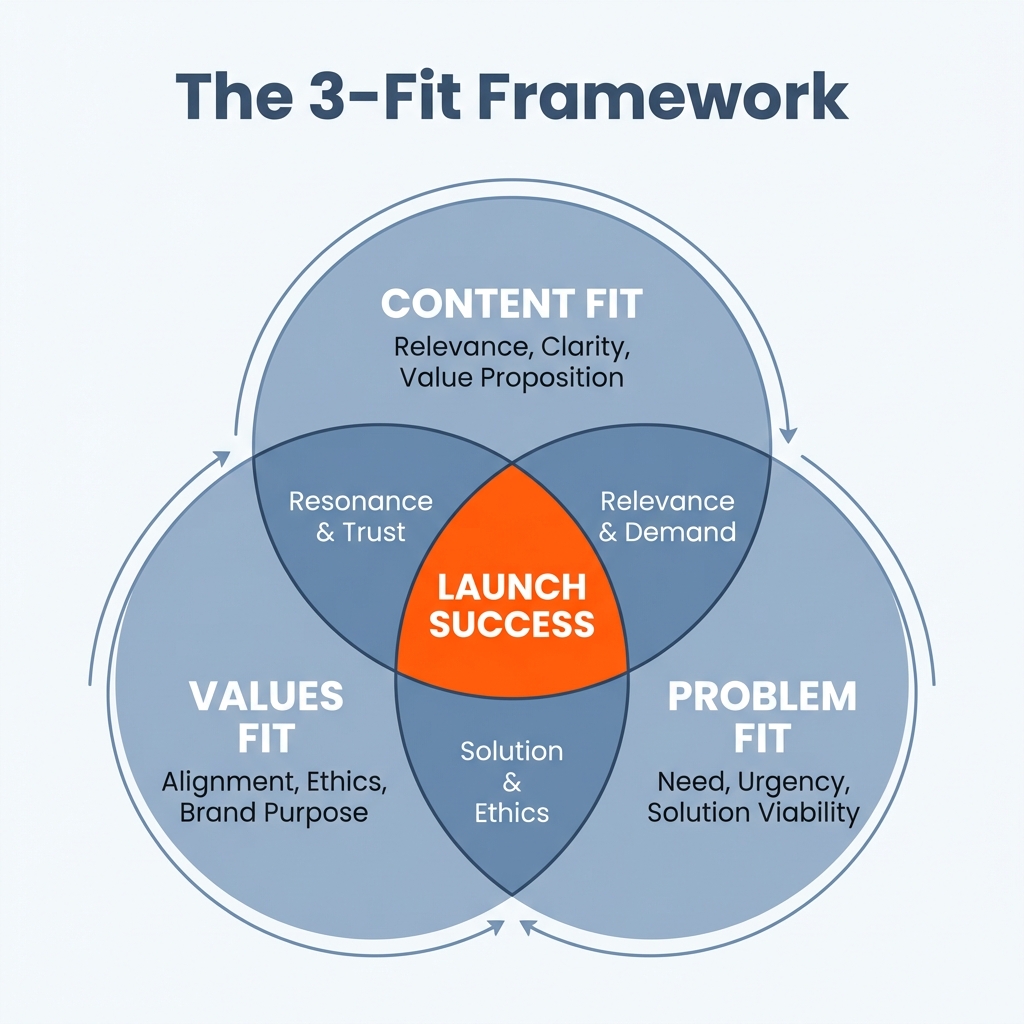
1. Content Fit: Does This Feel Like a Natural Chapter?
Imagine your content as a narrative. A good first product feels like the next natural chapter-not a plot twist. Test for content fit: Scroll back through your last 3 months of posts. If this product appeared in that feed, would it feel native or jarring?
Success Story: Chamberlain Coffee
Emma Chamberlain didn't launch a generic makeup line like her peers. She drank coffee in nearly every video for years. It was her trademark. When she launched Chamberlain Coffee, it didn't feel like a "product placement"; it felt like a prop from her life that fans could finally hold. That is 10/10 Content Fit.
2. Values Fit: Will You Stand by This in 5 Years?
Your name and credibility are on the line. Ask yourself: if this product broke or failed, could I defend it? The best creator products are ones where the creator would genuinely buy it themselves if someone else made it.
3. Problem Fit: Do Your Followers Actually Ask for This?
This is the most underrated part. Problem fit means your followers are actively expressing the pain point this product solves. Check your DMs and comments. Are they asking "I wish there was a..."? That's your signal.
Product Categories for Creators: Risk vs. Upside
Low-Risk: Digital Products and Basic Merch
Digital products (guides, templates) and Basic Merch have low MOQs and startup costs. Best for creators with 5K+ followers testing the waters.
Medium-Risk: Simple Physical Goods
Planners, journals, accessories. Moderate complexity, reasonable MOQs. Best for productivity or lifestyle niche creators.
Higher-Risk, Higher-Margin: Wellness & Beauty
Supplements, skincare, functional foods. This is where the real money is, but also the strict compliance and reputational risk. Supplements offer 60-80% margins but require FDA/FTC compliance and MOQs of 200-1000 units. Best for health and fitness creators with 30K+ engaged followers. Learn more about high-margin partnership models here.
Risk Warning: Liability
In wellness and skincare, your name is your liability. You cannot hide behind a manufacturer if a product causes issues. Choose partners with GMP certification and third-party testing.
How to Validate Your Product Idea
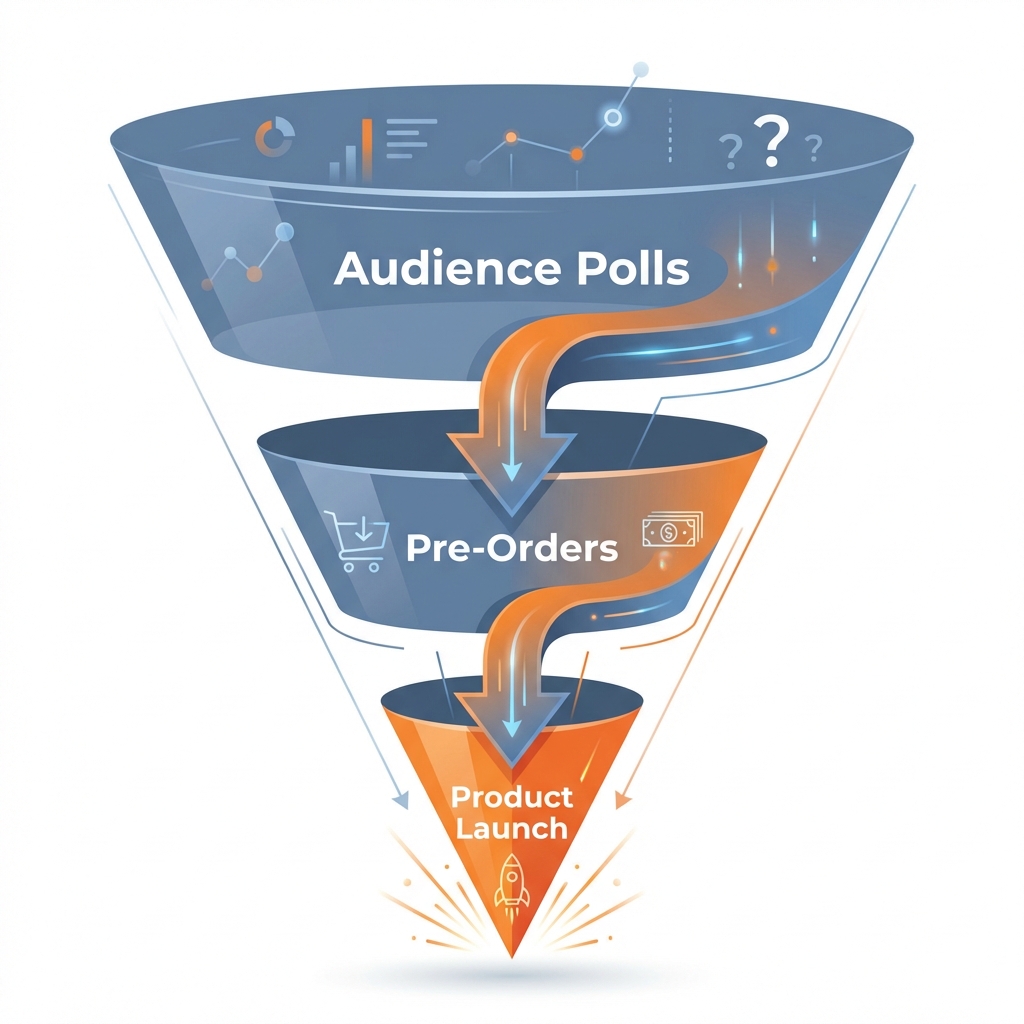
- Polls & Stories: Use Instagram/TikTok polls: "Would you buy X?" Look for >40% "Yes".
- Pre-Orders: Create a simple landing page. Order a sample. Offer a discount. If you get 50+ pre-orders from a 100K audience, demand is proven.
- Mining DMs: If 30%+ of DMs mention a specific pain point, you have validation.
When Your Product Touches Health or Wellness
If you are launching a supplement or skincare line, compliance is non-negotiable.
Cautionary Tale: The "Pink Sauce" Fiasco
In 2022, a TikTok creator went viral with "Pink Sauce". She shipped it nationwide without understanding food preservation laws. The result? Exploding bottles, potential botulism risks, and a reputation destroyed in days. In the consumable space, viral fame does not exempt you from FDA regulations.
Compliance Basics: FTC & FDA
- Health Claims: You cannot claim to treat or cure diseases. "Supports immunity" is OK; "Cures flu" is illegal.
- Disclosures: Paid partnerships or own-products must be clearly disclosed (#ad).
- Substantiation: Claims like "improves recovery by 40%" require proof.
Synervion and Science-Led Manufacturing
This is where partners like Synervion de-risk the process. By using pre-tested formulations and ensuring GMP compliance, we bridge the gap between expensive custom R&D and risky white-labeling. You get flexible MOQs, third-party verification, and a product you can trust your reputation with. Creators typically start with one of three models: white-label Cordyceps manufacturing (fastest to market), contract manufacturing (custom formulation, your label), or bulk ingredient sourcing (if you already have a production partner).
Common Launch Mistakes
- Copying others: Don't launch what worked for someone else. Launch what serves your audience.
- Ignoring MOQs: Don't get stuck with 1000 units of inventory. Model your margins properly.
- Rushing timelines: Compliance takes time. Add 2-4 weeks buffer.
- Bad unboxing: Your packaging is your first impression. Invest in it.
A Simple 7-Step Checklist
- Clarify Your Why: Write one sentence on why your audience needs this.
- Define 3-Fit Score: Rate Content, Values, and Problem fit (1-10). Target >7 average.
- Validate: Run a low-cost poll or pre-order test.
- Choose Category: Match risk/margin to your stage.
- Research Partners: Look for GMP, transparency, and support.
- Order Samples: Never commit without testing samples yourself.
- Soft Launch: Test with 10-20% of your audience first to iron out kinks.
Turn This Guide Into Content
Use your product journey to build trust. Share your "3-Fit Framework" score on Reels. Show the "Mistakes I See" on TikTok. Involve your audience in the decision via newsletters. Transparency sells.
Ready to Build Your Brand?
Synervion helps creators launch science-backed, premium mushroom supplements with low MOQs and full compliance support.
Start Your Product Journey →